Workshop on Molecular Docking
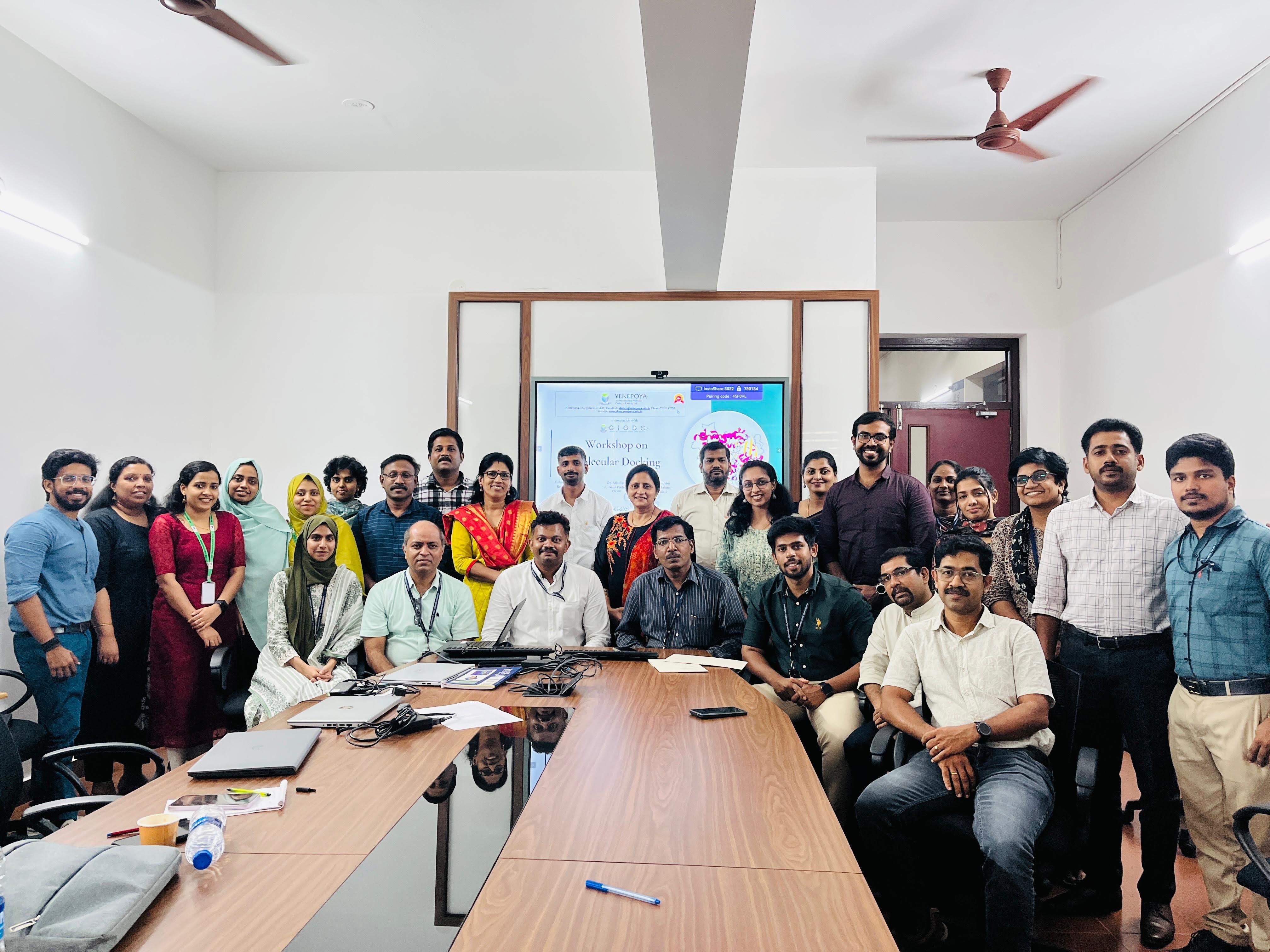
The core objective of this workshop was to bridge the gap between homoeopathy and modern computational biology, empowering researchers to visualize and analyze interactions between medicinal molecules and biological targets to understand the mechanism of action of homoeopathic remedies at a molecular level.
Resource Persons & Experts
The sessions were guided by computational biology and bioinformatics experts:
- Dr. Abhithaj J (Asst. Professor, CIODS): Specializes in virtual screening, molecular dynamics, and computational drug design.
- Mr. Levin John (Data Scientist, CIODS): Expert in structural biology, machine learning in bioinformatics, and tools like AutoDock and Schrödinger Suite.
- Mrs. Fathimath Henna (Research Assistant): Computational Biologist specializing in AI-driven approaches to alternative medicine and a key developer of "HomoeOmics" (the first Omics Database for Homeopathy).
Pre-Workshop Preparations & Software Stack
To facilitate the hands-on sessions, participants were required to set up their laptops with the following open-source and licensed tools:
Simulation Software
AutoDock: The primary molecular modeling simulation software used for docking. MGL Tools: Used alongside AutoDock to set up the docking runs and process the grids.
Visualization
LigPlot+: Software utilized to generate 2D schematic diagrams of protein-ligand interactions. PyMOL: A highly capable molecular visualization system.
- JDK 23 (Win64): Java Development Kit required as a backend environment for running specific structural biology tools.
- PDB & .SDF Files: Initial structural data files were copied to local machines to act as the primary biological targets and medicinal molecules.
Hands-On Session Details & Workflow
The practical phase of the workshop walked through the complete computational drug discovery pipeline:
Learned how to source and download valid 3D models for both proteins/receptors (usually from the Protein Data Bank - PDB) and ligands (medicinal molecules in .SDF format).
Imported the raw downloaded models into the processing software. Demonstrated the crucial step of preparing the protein by hydrating it (managing water molecules), adding polar hydrogens, and assigning correct charges to stabilize the molecule for simulation.
Configured the grid box and parameters. Ran actual docking simulations using AutoDock to see how the ligand interacts with the target protein.
Used tools like PyMOL to visually interpret the docking results, binding affinities, and docking scores in 3D.
Advanced Technologies & Hardware Demo
Beyond the open-source tools used on personal laptops, the experts gave a glimpse into industry-grade computational infrastructure:
- Paid/Premium Software: A demonstration of premium molecular modeling software (Schrödinger Suite) highlighting differences in interface, speed, and capabilities compared to open-source alternatives.
- Hardware Demonstration: The team showcased a specialized Linux Workstation dedicated exclusively to heavy computational drug discovery and molecular dynamics. This highlighted the computing power required for large-scale bioinformatics tasks.
Networking & Participant Demographics
The workshop was an exclusive, small-batch event limited to 25 participants. A significant portion of the participants were Post Graduate (PG) scholars from Govt. Homoeo College, Trivandrum. They are actively integrating computational biology into their academic work, specifically utilizing molecular docking as a core component of their PG dissertation projects.
Collaborating with these PG scholars provided a great networking opportunity, allowing for close interaction and shared learning on how computational models are being practically applied to ongoing homoeopathic research.
Gallery
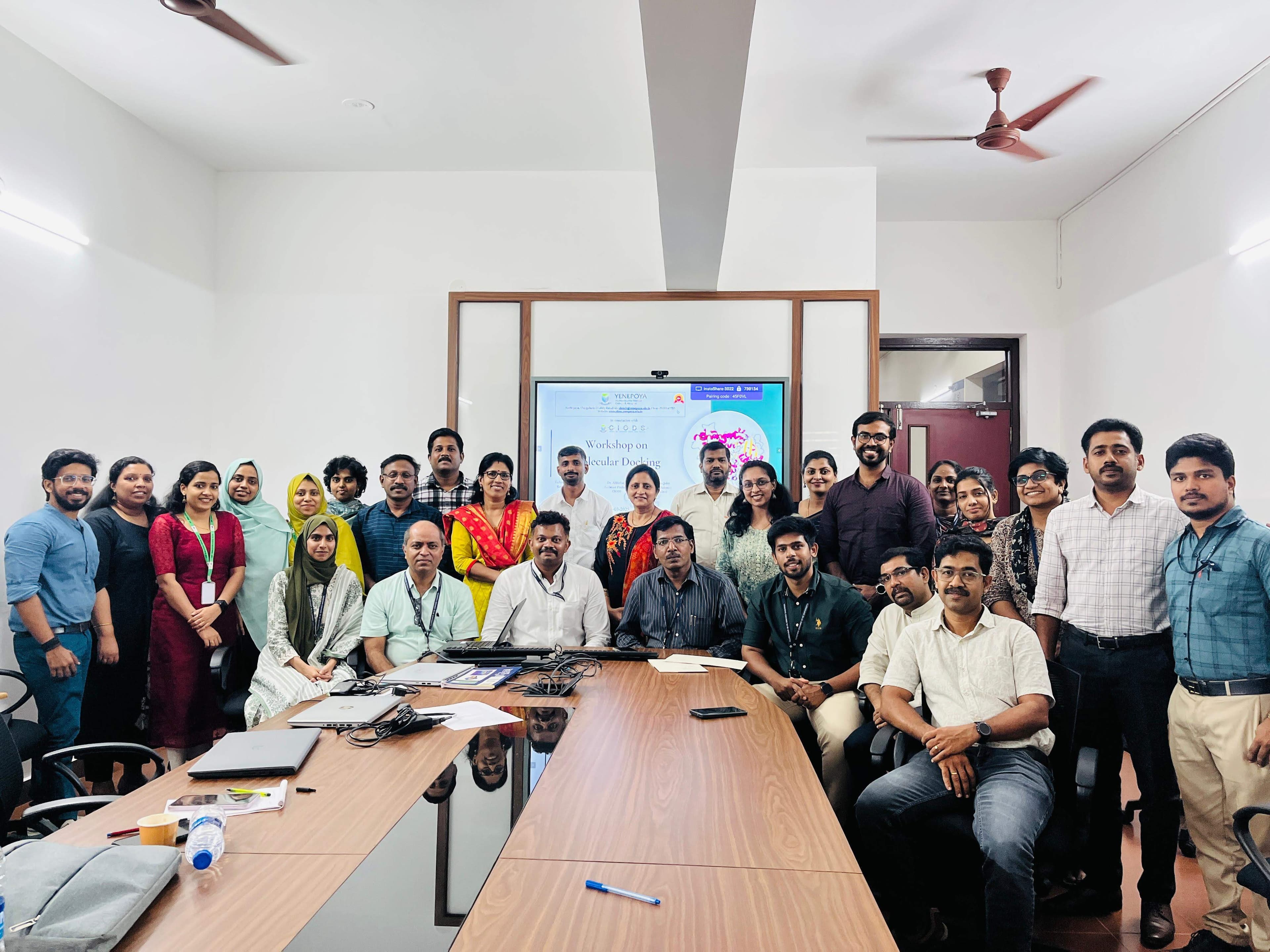
With the Principal, Experts, and Cohort
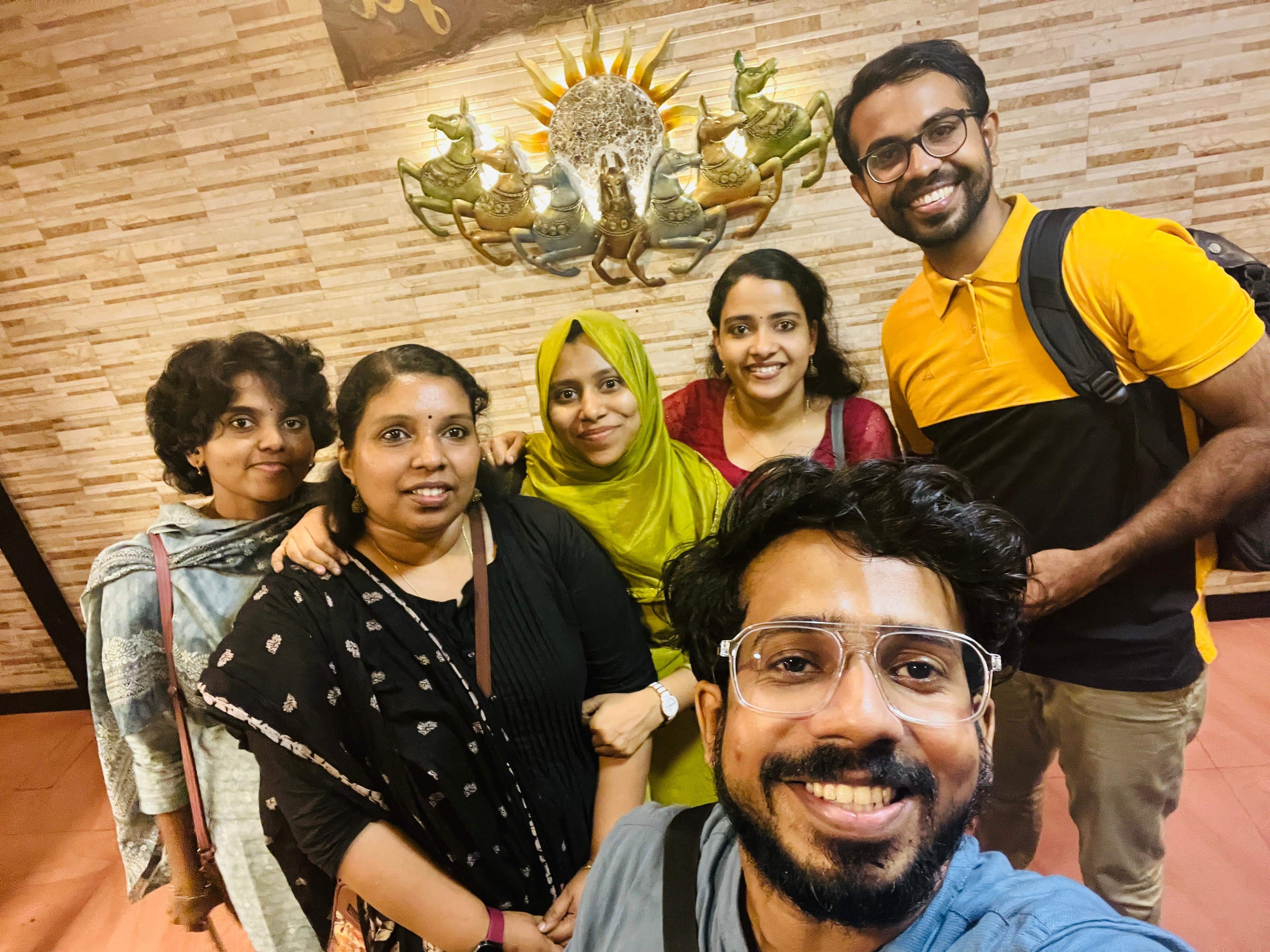
Networking with PG Scholars from Trivandrum